Recovery Yoga: The Hidden Weapon for Strength & Conditioning Success
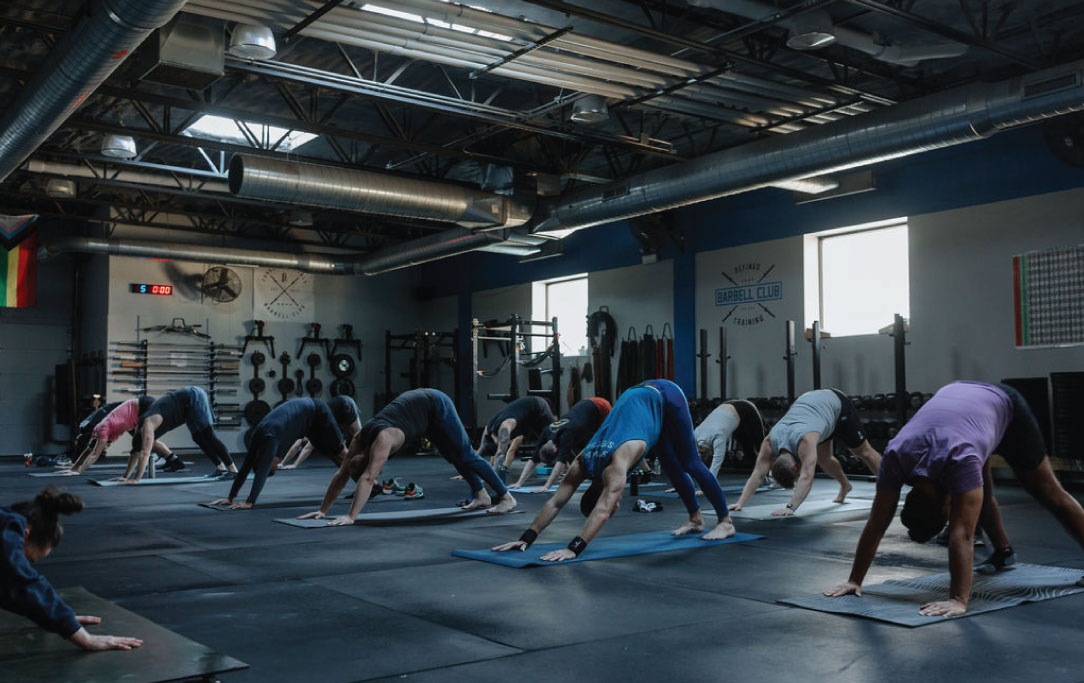
At Defined, we’re thrilled to offer Recovery Yoga every Sunday morning — read on to learn how recovery yoga adds value to your training, and why we all should consider slowing down to speed up our recovery and our progress.
By
Defined Training
December 4, 2025
Don’t miss another article
Thank you! Your submission has been received!
Oops! Something went wrong while submitting the form.
Related
Defined Training
•
December 4, 2025
Many strength & conditioning programs often focus on lifting heavier, faster, or longer — but one often-overlooked ingredient for progress and longevity is recovery. Among recovery tools, yoga stands out as a powerful, science-backed modality that supports not just flexibility, but muscle recovery, nervous-system balance, and injury prevention.
At Defined, we’re thrilled to offer Recovery Yoga every Sunday morning–-read on to learn how recovery yoga adds value to your training, and why we all should consider slowing down to speed up our recovery and our progress.
What Is “Recovery Yoga”?
“Recovery yoga” refers to gentle, restorative, or mobility-focused yoga practices intentionally used after intense training — or on off-days. Rather than using yoga as a primary training modality (like strength or endurance), recovery yoga is designed to help the body and nervous system reset, repair, and prepare for the next training stimulus.
After heavy lifting or conditioning sessions, muscles suffer microscopic damage and metabolic stress — essential for growth, but often frustrating due to delayed onset muscle soreness (DOMS). Recovery yoga supports healing by gently stretching muscles and improving circulation, thus promoting delivery of oxygen and nutrients while helping clear metabolic waste.
Some studies show that athletes who incorporate yoga into their post-exercise routines report less soreness and quicker recovery compared with passive rest.
2. Improved Flexibility, Mobility, and Joint Health
Strength work (especially heavy lifting) can lead to tight muscles, restrictive range of motion, or imbalances — which over time may increase injury risk or limit performance. Yoga helps preserve or restore joint range of motion and flexibility, allowing lifters and athletes to maintain functional movement patterns.
3. Nervous System Reset & Improved Autonomic Recovery
Intense training activates the sympathetic nervous system (“fight-or-flight”). Recovery yoga — especially styles emphasizing breath work and relaxation — helps shift the balance toward the parasympathetic nervous system (“rest-and-digest”), which is essential for recovery, repair, and stress regulation.
In controlled trials, yoga post-exercise improved heart-rate variability (HRV) and lowered respiratory and cardiovascular stress compared with simple stretching — a sign of enhanced autonomic recovery.
This nervous-system recovery can translate to better sleep, hormonal balance, and readiness for the next training session — all critical in a structured strength & conditioning program.
4. Enhanced Stability, Core Strength, Balance, and Injury Prevention
Yoga isn’t just about flexibility: many poses engage stabilizer muscles, the core, and small supporting muscles that don’t always get targeted in typical strength workouts. This can improve balance, proprioception, and joint stability — foundational for safe, efficient training.
Strength training and conditioning are taxing — not just physically, but mentally. Yoga integrates mindful movement and breathing that reduce stress hormones (like cortisol), calm the nervous system, and promote emotional well-being.
Lower stress and better mental recovery supports consistent training, better focus, and improved performance. For athletes, that mental resilience can be just as important as physical strength.
Yoga ≠ Replacement — but a Powerful Complement
It’s important to clarify: recovery yoga isn’t a substitute for strength training, conditioning, or sport-specific work. Rather, it’s a supportive tool — a recovery, maintenance, and longevity strategy.
For athletes committed to long-term strength and performance, recovery yoga can be a hidden “force multiplier”: helping you recover faster, move better, protect joints, and stay mentally resilient.
Ready to get flexy? Join us for Recovery Yoga every Sunday at Defined! Sign up in PushPress.












































.jpg)




.png)